




As electric bikes become a popular choice for daily commutes and recreational riding, a common question arises: "Is my e-bike afraid of water?" This concern reflects a deep focus on the vehicle's reliability in changeable weather. This article provides a comprehensive analysis of e-bike water resistance mechanisms, key metrics, and practical strategies for wet-weather riding.
How E-Bikes Achieve "Water Resistance": Structural Design and Protection Principles
"Water resistance" in e-bikes does not mean being completely sealed like a submarine, but rather that their core electrical systems can resist the ingress of common liquids like rain and water splashes. This protection is primarily achieved through the following structural designs:
-
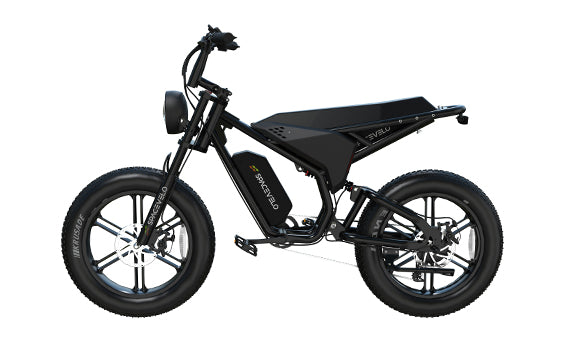
Sealed Protection for Critical Components: Core electronic elements such as the battery pack, motor controller, and connector ports use processes like rubber gaskets, waterproof adhesive, and integrated encapsulation for physical sealing. For example, the motor system of the Spacevelo Blitz S1 employs a multi-layer sealing structure to ensure circuit boards are isolated from moisture.
-
Scientific Drainage and Pressure Equalization Design: Well-designed frames avoid creating water-collecting recesses and incorporate one-way waterproof breathable valves for components like the battery compartment. This design blocks liquid water while balancing internal and external air pressure, preventing the buildup of condensation from temperature changes.
-
Fully Water-Resistant Wiring Harness System: Connection cables from the motor to the controller, and from the battery to the display, use waterproof connectors with internal potting to prevent moisture ingress through capillary action.
Understanding the Core Metric: The IP Rating System
The most authoritative standard for evaluating water resistance is the International Protection (IP) Rating code. It consists of two digits:
-
First Digit (0-6): Protection against dust and solid objects.
-
Second Digit (0-9): Water resistance level—this is the key metric for water protection.
Here are the common water resistance ratings for e-bikes and their practical meanings:
| IP Rating | Water Protection Definition | Practical Riding Meaning | Suitable Scenarios & Precautions |
|---|---|---|---|
| IPX4 | Protected against water splashes from all directions. | Handles light rain and road splash. Basic configuration for most commuter models. | City commuting, occasional showers; avoid heavy downpours. |
| IPX5/IPX6 | Protected against water jets from a nozzle (low-pressure/high-pressure). | Withstands moderate to heavy rain, suitable for all-weather riding. | All-weather commuting, light off-road; can safely traverse shallow puddles. |
| IPX7 | Can withstand temporary immersion up to 1 meter for 30 minutes. | Offers very strong water resistance, capable of handling deeper puddles. | Adventure riding, unavoidable water crossings. |
Important Note: A vehicle's overall protection level is determined by its weakest link. Even if a single component (like a motor) has a high rating, the overall water resistance can be compromised if the battery compartment seal is weak or the charging port cover is not securely closed.
Engineered for Demanding Conditions: The Water Resistance Innovations of the Spacevelo Blitz S1
For riders seeking all-terrain adventure, the Spacevelo Blitz S1 represents an advanced solution in e-bike water resistance technology:
-
IP67-Rated Motor System: The Blitz S1's hub motor achieves an IP67 rating, meaning it is completely dust-tight and can withstand immersion in 1 meter of water for 30 minutes without damage. This allows the bike to handle heavy rain, deep puddles, and muddy conditions, providing reliable assurance for adventure riding.
-
Dual-Seal Battery Compartment Design: Utilizing a dual-protection system of "rubber gasket + waterproof coating" combined with precise tolerance fitting, this ensures the battery interface remains dry even during sustained rainfall.
-
Coordinated Whole-Bike Water Resistance Design: The Blitz S1 focuses not only on high individual component ratings but also on the waterproof coordination of all system interfaces. Every connection point, from the handlebar controller to the taillight wiring, receives specialized waterproof treatment to avoid weak links in protection.
Complete Wet-Weather Riding and Maintenance Guide
Pre-Ride Preparation
-
Seal Check: Ensure the battery compartment latch is fully engaged and rubber protective caps for ports like the charger and display are properly installed.
-
Tire Adjustment: Slightly reduce tire pressure by about 10% to increase the contact patch and improve grip on wet surfaces.
-
Lighting System: Turn on front and rear lights. Lights are a critical safety feature when visibility is reduced by rain.
Considerations While Riding
-
Smooth Operation: Avoid sudden acceleration and hard braking on slippery surfaces. Maintain stability when cornering.
-
Water Crossing Guideline: Assess depth before entering standing water; water depth should not exceed the wheel hub center. Proceed at a steady pace, avoiding stopping in the water.
-
Environmental Awareness: Stay clear of public fixtures that may have electrical faults. Be observant of road oil slicks (especially slippery when wet).
Post-Ride Maintenance (Crucial)
-
Cleaning Process:
-
Use a soft cloth to wipe down the frame and drivetrain. Never use a high-pressure washer to spray electrical components directly.
-
Spacevelo Blitz S1 owners can use low-pressure water to rinse mud from the frame, thanks to its high protection rating.
-
Use a dry cloth or compressed air on the chain to remove moisture, then re-lubricate.
-
-
Drying Process:
-
Park the bike in a ventilated area to air dry naturally, avoiding direct sunlight or high-temperature baking.
-
The battery can be removed to wipe its casing and contacts dry.
-
-
Regular Deep Maintenance:
-
Check brake pad wear monthly (braking in rain accelerates wear).
-
Inspect bolts in various areas for rust or looseness due to dampness.
-
After multiple wet rides or quarterly, consider professional maintenance with waterproof grease for bearings.
-
Common Myths vs. Scientific Facts
-
Myth Correction: A high IP rating does not equal "safe for pressure washing." Even models like the Blitz S1 with IP67 protection should avoid direct high-pressure spray on bearings and electrical interfaces.
-
Performance Awareness: Water resistance naturally degrades as seals age. Regular inspection is more important than relying solely on the initial rating.
-
Charging Safety: It is perfectly safe to charge in the rain as long as the battery and charger are dry and you are in an indoor environment.
Selection and Usage Recommendations
For most city riders, an IPX5/IPX6 rating is sufficient for daily rain riding. If you frequently ride in harsh weather or enjoy outdoor adventure, prioritize models like the Spacevelo Blitz S1, whose key components reach an IPX7 rating.
Regardless of a bike's protection rating, smart riding habits and meticulous post-rain care are fundamental to long-term reliability. Correctly understanding and applying this knowledge allows you to transform worry into confidence when riding in the rain, truly enjoying the freedom and pleasure of all-weather cycling.
Once you master these principles, you will not only be able to choose an e-bike that suits your needs more wisely but also keep your beloved bike in optimal condition for years of use. Rain should not be a barrier to riding, but rather another stage to showcase a vehicle's quality and a rider's wisdom.