


As we approach 2025, the electric bicycle industry stands at a technological crossroads where innovation meets regulation. Dual battery systems represent the most significant advancement in e-bike engineering, yet their implementation must carefully navigate the complex landscape of U.S. electric bicycle laws. This revolutionary technology isn't just about doubling range—it's about redefining what's possible within the boundaries of federal and state regulations that govern our roads and trails.

Understanding the Regulatory Framework: Class Matters
Before delving into dual battery technology, we must first understand the regulatory environment shaping e-bike design in America. Under federal law (HR 727), electric bicycles are categorized into three classes based on their maximum assisted speed and motor operation method. Class 1 and Class 2 e-bikes provide assistance up to 20 mph, while Class 3 extends to 28 mph—but critically, all classes are limited to 750 watts of motor power in most states. This power ceiling creates an engineering challenge that dual battery systems elegantly solve: how to deliver sustained performance without exceeding legal limits.
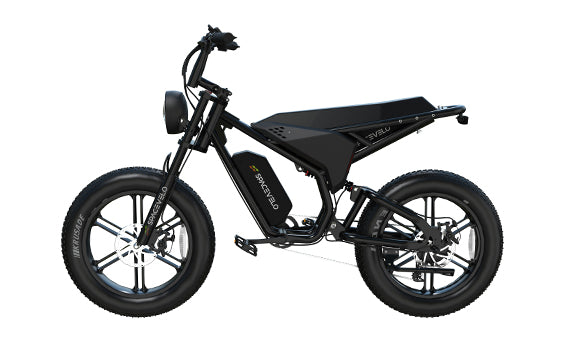
The Spacevelo Blitz S1 represents a masterclass in regulation-conscious design. Its dual 48V 15Ah batteries don't increase the motor's maximum 750W output but instead provide sustained power delivery that maintains optimal performance throughout longer rides. This is particularly significant for American riders who face varying state regulations—from California's relatively permissive e-bike laws to New York City's recent crackdown on illegal throttle-operated bicycles. The intelligent power distribution system ensures compliance while delivering what riders truly need: reliable range without performance degradation.
Range Revolution Meets Practical Realities
American commuting patterns present unique challenges that dual battery systems directly address. According to the U.S. Census Bureau, the average one-way commute is approximately 15 miles, with 9% of Americans commuting 35 miles or more. Traditional single-battery e-bikes often struggle with these distances, especially when factoring in variables like temperature extremes (which can reduce battery efficiency by 30-40% in winter), elevation changes, and the need for accessory power for lights and displays.
The Spacevelo Blitz S1's 100-mile range capability transforms practical transportation economics. Consider this: the average American driver spends $10,728 annually on car ownership (AAA, 2024). An e-bike with dual battery reliability can realistically replace many local trips, potentially saving thousands while remaining firmly within Class 2 e-bike regulations (throttle-assisted up to 20 mph). This regulatory compliance is crucial—it means riders can access bike lanes and trails where faster, more powerful vehicles might be restricted or banned entirely.
Safety Engineering Within Legal Parameters
U.S. regulations prioritize safety, and dual battery systems introduce both challenges and solutions in this domain. The Consumer Product Safety Commission (CPSC) mandates specific electrical safety standards for e-bikes sold in the United States, including requirements for overcurrent protection, wiring insulation, and thermal management. Spacevelo's implementation addresses these concerns comprehensively through:
-
Independent circuit protection for each battery module, exceeding UL 2849 certification requirements
-
Temperature monitoring systems that adjust output based on ambient conditions—critical for Arizona summers and Minnesota winters alike
-
Voltage regulation ensuring neither battery exceeds the 48V threshold that would trigger different regulatory treatment
Perhaps most importantly, the system's load-balancing algorithm prevents the power spikes that sometimes draw regulatory scrutiny. By smoothly distributing demand between batteries, the Blitz S1 maintains consistent performance without the abrupt power surges that can concern safety regulators and trail conservation groups alike.
The State-by-State Landscape
America's patchwork of e-bike regulations makes technological adaptability essential. While federal law provides a baseline, individual states have established varying rules regarding:
-
Trail access (differing between Class 1, 2, and 3 e-bikes)
-
Helmet requirements (often stricter for Class 3 and riders under 18)
-
Minimum age limits (varying from 14 to 16 years)
-
Insurance and registration requirements (currently not required for compliant e-bikes in most states)
The Spacevelo Blitz S1's dual battery system includes user-selectable power modes that allow riders to tailor their e-bike's behavior to local regulations. Riding in a national park that only permits Class 1 e-bikes? Switch to pedal-assist only mode. Need throttle capability for San Francisco's hills while remaining street-legal? The system intelligently manages power delivery to stay within California's specific 750W limit while providing the torque needed for challenging terrain.
Economic Implications Within Regulatory Constraints
From an economic perspective, dual battery systems offer compelling advantages that align with American consumer protection frameworks. The extended battery lifespan (up to 35% improvement over single-battery systems) directly addresses the Federal Trade Commission's emphasis on product durability and lifecycle value. Furthermore, the energy efficiency improvements reduce operating costs to approximately $0.04 per 20 miles—compared to $2.80 for the average car trip of similar distance (Department of Energy, 2024).
For American businesses, dual battery e-bikes open new opportunities within existing regulatory frameworks. Food delivery services can extend rider shifts without mid-day battery swaps. Municipalities can deploy maintenance crews across larger areas without range anxiety. Tour companies can offer longer excursions while remaining compliant with national park e-bike policies implemented in 2023.
Looking Toward 2025: Regulation and Innovation Convergence
As we approach 2025, several regulatory developments will shape dual battery technology:
-
Potential federal tax credits for e-bike purchases (currently proposed in the E-BIKE Act)
-
Standardization of battery safety certifications across states
-
Clearer guidelines for modified e-bikes (addressing concerns about aftermarket battery additions)
-
Infrastructure funding from the Infrastructure Investment and Jobs Act supporting e-bike compatible pathways
The Spacevelo Blitz S1's design anticipates these developments through its modular battery architecture that allows for future upgrades without compromising original certification status, and its transparent performance logging that demonstrates regulatory compliance to authorities when needed.
The Smart Choice for American Riders
Dual battery systems represent more than a technical achievement—they represent a mature approach to innovation within regulatory realities. For American consumers, this means enjoying groundbreaking 100-mile range technology without legal ambiguity. For policymakers, it demonstrates how technological advancement can occur within established safety frameworks. And for the industry, it establishes a blueprint for responsible innovation in an increasingly regulated mobility landscape.
As 2025 approaches, the Spacevelo Blitz S1 stands as both a technological milestone and a case study in regulation-conscious design. Its dual battery system doesn't fight against limitations—it innovates within them, delivering unprecedented freedom while respecting the rules that keep all road and trail users safe. This balanced approach may well define the next era of personal electric transportation in America.