




Range anxiety is the number one reason people hesitate to buy an electric bike. You've probably had the thought yourself: What if I run out of battery halfway through my ride? What if the manufacturer's range claim is wildly optimistic? What if I want to take a longer route on the weekend?
The answer to all of these concerns is increasingly the same: dual battery eBikes. By carrying two batteries instead of one, these bikes deliver 80 to 120+ miles of real-world range — enough for a full week of commuting or an all-day adventure ride without ever thinking about charging. Here's everything you need to know about how dual battery systems work, what to look for, and which bikes do it best in 2026.

How Dual Battery Systems Work
A dual battery eBike carries two separate battery packs that power the same motor. The system can work in two ways:
- Sequential discharge: The bike drains one battery completely before switching to the second. This is the most common approach and allows you to hot-swap a depleted battery with a charged spare mid-ride.
- Parallel discharge: Both batteries drain simultaneously, sharing the load equally. This can extend the overall lifespan of both batteries since neither is being stressed as hard.
In either case, the rider experience is seamless. You ride normally, and the bike manages battery switching automatically. Most dual battery bikes show a combined battery percentage on the display, so you always know your total remaining range.
Why Manufacturer Range Claims Are Misleading
Every eBike manufacturer advertises a maximum range number. But those numbers are tested under ideal conditions: flat terrain, a lightweight rider, lowest pedal assist level, moderate temperature, and no wind. Your real-world range is almost always 40–60% lower than the advertised number.
Here's how different factors reduce your real range:
| Factor | Range Impact |
|---|---|
| Hilly terrain | −20% to −40% |
| Headwind | −10% to −25% |
| Higher assist level (PAS 4–5) | −30% to −50% |
| Cold weather (below 40°F) | −15% to −30% |
| Rider weight over 200 lbs | −10% to −20% |
| Tire pressure too low | −5% to −15% |
| Frequent stops and starts | −10% to −20% |
This is exactly why dual battery systems matter. A bike claiming 60 miles of range on a single battery might deliver only 35–40 miles in real conditions. But a dual battery bike claiming 100+ miles can still deliver 70–80 miles even with every factor working against you. That buffer eliminates range anxiety completely.
What to Look for in a Dual Battery eBike
Not all dual battery setups are equal. Here's what separates a great system from a mediocre one:
- Cell quality: Samsung and LG cells are the gold standard for energy density, cycle life, and safety. Avoid bikes that don't disclose their cell manufacturer.
- Total Wh capacity: Watt-hours (Wh) is the true measure of battery energy, not voltage alone. Look for at least 1,000Wh combined. The best dual battery bikes offer 1,200–1,500Wh.
- BMS (Battery Management System): A smart BMS protects against overcharging, overheating, and deep discharge. It's the silent guardian of your investment.
- Swappable design: The best systems let you remove and charge each battery independently. This means you can charge one at work and one at home, always keeping a fresh battery ready.
- Weight distribution: Two batteries add weight. Well-designed bikes integrate them into the frame to maintain a low center of gravity and balanced handling.
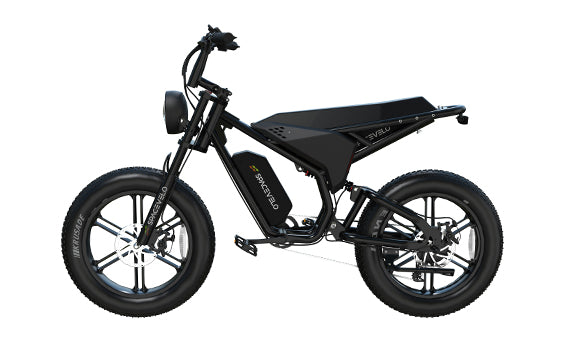
The Spacevelo Blitz S1: A Dual Battery Case Study
The Spacevelo Blitz S1 is one of the most compelling dual battery fat tire eBikes on the market in 2026, largely because of its price-to-range ratio. Here's how its battery system stacks up:
| Battery Spec | Blitz S1 Details |
|---|---|
| Cell manufacturer | Samsung |
| Configuration | Dual 48V packs |
| Total capacity | 1,440Wh (720Wh × 2) |
| BMS | 30A Smart BMS with thermal protection |
| Advertised range | 100+ miles |
| Real-world range (mixed riding) | 75–95 miles |
| Worst-case range (hills + cold + PAS 5) | 50–65 miles |
| Charge time | 5–6 hours per battery |
| Swappable | Yes |
| Price | $1,699 |
Even in the worst-case scenario of steep hills, cold weather, and maximum assist, the Blitz S1 delivers at least 50 miles. That's more than most single-battery competitors deliver under ideal conditions. Under normal mixed-terrain riding, expect 75–95 miles — enough for 3–5 days of average commuting on a single charge.
How to Maximize Your eBike Range
Regardless of which eBike you ride, these habits will help you squeeze every mile from your battery:
- Keep tires inflated to the recommended PSI. Under-inflated fat tires are the biggest range killer.
- Use lower PAS levels on flat terrain and save the higher levels for hills.
- Pedal actively instead of relying solely on throttle. Even light pedaling extends range dramatically.
- Store and charge batteries at room temperature. Cold batteries discharge faster and charge slower.
- Avoid letting batteries drain below 20% regularly. Keeping them between 20–80% extends long-term lifespan.
- Shift gears appropriately. Using the right gear reduces motor strain and improves efficiency.
Is a Dual Battery eBike Worth It?
If you commute daily, ride long distances on weekends, or simply hate worrying about running out of power, a dual battery eBike is absolutely worth it. The peace of mind alone changes how you ride. You take longer routes because you can. You use higher assist levels because the range allows it. You stop checking the battery percentage every five minutes.
At $1,699, the Spacevelo Blitz S1 makes dual battery technology accessible to riders who previously could only find it on bikes costing $2,500 or more. Combined with its 750W Bafang motor, full suspension, and fat tires, it's built for riders who want maximum capability without maximum spending.
Explore the Spacevelo Blitz S1 and its dual battery system at spacevelo.com. Free shipping across the US, 2-year warranty, and 30-day returns.